


Quai Branly Museum Collection Comparison
| Continent | Type of object | Number of object | Main period | Styles / Particularities |
|---|
Discover the innovative architecture and unique environment of the Quai Branly Museum
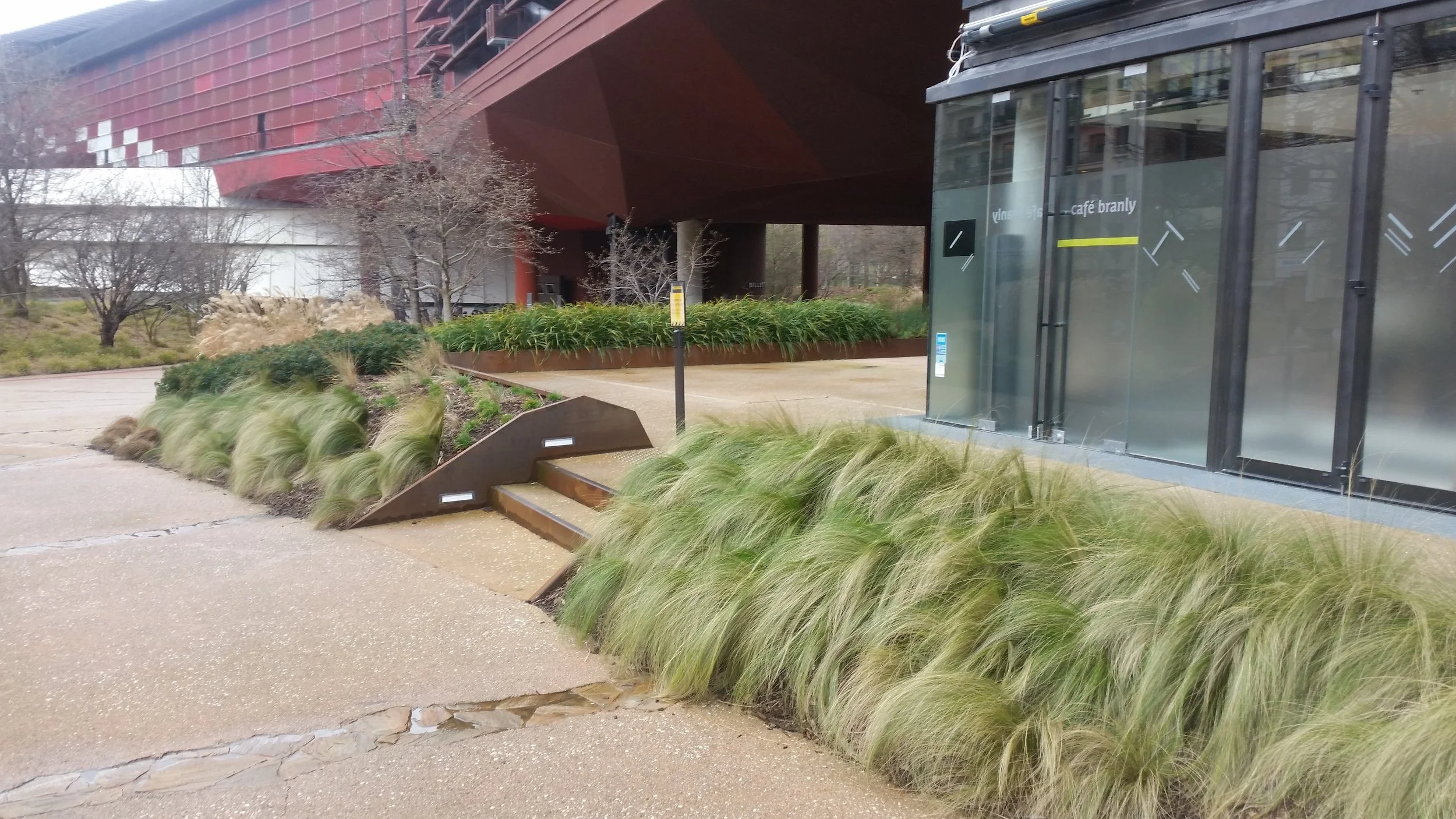
Located in the 7th arrondissement of Paris, the Quai Branly – Jacques Chirac Museum is much more than just an exhibition space; it is a harmonious fusion of architectural modernity and natural richness. Designed by Jean Nouvel, a renowned contemporary architect, this building was completed in 2006 thanks to the initiative of Jacques Chirac, who aimed to promote the arts of Africa, Oceania, and the Americas. Its audacious architecture features a suspended bridge-building on stilts, floating above a sumptuous 18-hectare garden created by landscape architect Gilles Clément. This innovative design provides 36,000 m² of green space where visitors can stroll among valleys, winding paths, and ponds conducive to meditation.
The impressive 800 m² living wall, the work of botanist Patrick Blanc, is one of the first wonders that greet visitors. This wall incorporates more than 15,000 plants of 150 different species from various continents, creating a veritable living tableau. It symbolizes the bridge between cultures, merging nature and architecture in a constant dialogue. This union is also felt on the rooftop terrace where the restaurant Les Ombres offers a spectacular view of the Eiffel Tower and the Seine, inviting guests to enjoy a gourmet break in an exceptional setting. This unique setting makes the Quai Branly Museum a haven of peace in the heart of the capital, offering a unique and soothing immersive experience, far from the hustle and bustle of Paris.
The museum is designed as a complete cultural ecosystem that fosters research and the transmission of knowledge. The extensive storage facilities accessible to researchers, as well as the media library and conference rooms, redefine the traditional tourist visit. The integration of a theater – the Claude Lévi-Strauss Theater – and a cinema significantly enriches the experience by blending visual arts, performances, and musical discoveries. Ultimately, the museum’s spatial and landscape design invites a truly sensory journey where each visit is an invitation to travel through the civilizations of Africa, Asia, Oceania, and the Americas.
In-depth exploration of the ethnographic and tribal art collections at the Musée du quai Branly
At the heart of the museum, the richness of its ethnographic collections attracts the attention of enthusiasts of tribal art and world heritage. Comprising more than one million objects, these collections reflect the cultural diversity of several continents: Africa, Asia, Oceania, and the Americas. Of these, approximately 300,000 pieces are documented in the online catalog as of 2025, with 3,500 on permanent display across 5,300 square meters. These objects are divided into three main specialized sections: musical instruments, textiles—with more than 25,000 pieces—and objects related to French colonial history.
The collection of instruments, visible through a central glass tower, invites visitors to understand the sonic diversity of non-Western cultures. For example, ceremonial drums from Central Africa, flutes from Latin America, and percussion instruments from Oceania illustrate the profound variety of musical expression. Meanwhile, textiles, often fragile and rich in symbolism, tell ancestral stories, such as African commemorative loincloths or Indigenous ceremonial robes from North America.
The museum also excels in its sculptural and artistic heritage. From Cameroonian royal statues and Dogon masks from Mali to Aboriginal ritual ornaments from Australia, each piece bears witness to a culture and its deep connections to the sacred, the political, and the social. In parallel, the History collection presents objects related to colonial circumstances, an essential aspect for understanding the historical context and contemporary issues surrounding material and symbolic remains. For example, the museum’s layout regularly highlights the debates surrounding the provenance of African artworks acquired during colonization, which are now the subject of rigorous study and restitution processes.
Temporary exhibitions at the Musée du quai Branly: a window onto the civilizations of Africa, Asia, Oceania, and the Americas
Beyond its permanent collections, the Musée du quai Branly is distinguished by its unparalleled program of temporary exhibitions. Each year, these exhibitions offer a fresh perspective on the artistic and cultural traditions of civilizations from around the world. They are presented both in the collections gallery on the first floor and in the large, light-filled gallery on the ground floor. A major shift in the programming involves blending ancient art with contemporary creations, fostering a fascinating dialogue between past and present. Landmark exhibitions such as “Tattoo Artists, Tattooed” and “Amazônia,” focused on Amazonian culture, have attracted hundreds of thousands of visitors. These events present not only objects, but also immersive sound and visual experiences that offer an innovative sensory and anthropological interpretation. The Claude Lévi-Strauss Theatre, integrated into the museum, serves as a platform for performances and thematic lectures related to these exhibitions, paying tribute to the richness of indigenous arts.
International cultural partnerships and related research also enable the museum to mount large-scale exhibitions dedicated to specific civilizations, such as the Kanak societies of New Caledonia, the Native American cultures of North America, and Oceanic art. Through these regular programs, the museum fully fulfills its mission of promoting and recognizing heritages previously overlooked in the history of classical art. For example, the exhibition “On the Road to the Chiefdoms of Cameroon” showcased royal thrones and other symbols of power, enriching our understanding of these traditional societies.
Commitments and missions of the Musée du quai Branly in promoting world heritage and cultural rights
Since its inauguration, the Musée du quai Branly has established itself as a key player in world heritage thanks to its mission to promote non-Western cultures, which have long been marginalized. Taking into account contemporary debates surrounding the restitution of objects stolen during the colonial period, the museum is at the forefront of initiatives for an ethical approach to conservation. A 2019 investigation conducted by its curators focused in particular on the provenance of 46,000 African objects, prompting restitution requests from several countries, including Benin, Mali, and Senegal. The return to Benin of 26 works from the royal treasury of Abomey in 2021 illustrates this new paradigm, contributing to the historical rebalancing of cultural heritage. The museum also pursues awareness and educational activities through its media library, its library, and its numerous scholarly publications, such as the journal Gradhiva, which works to disseminate anthropological and ethnological knowledge. This media library houses an impressive collection of photographs, archives, and audiovisual documents, fostering dialogue between researchers, artists, and visitors.
The Musée du quai Branly also plays an active educational role through workshops, conferences, and meetings with representatives of Indigenous peoples. These initiatives strengthen intercultural dialogue and shift perceptions of Indigenous art, which is now recognized on par with major Western art forms. Furthermore, the Claude Lévi-Strauss Theatre offers an eclectic program, hosting concerts, shows, and artistic performances that celebrate the diversity of global cultural expressions. This participatory approach is rooted in respect for cultural rights and the self-determination of peoples.
The Museum’s Exhibition at the Musée du quai Branly: An Immersive Experience Through World Civilizations