


The Keys to Understanding the Number of Annual Working Days in France
For every French employee, accurately determining the number of working days in a year is essential, whether for organizing their schedule or understanding their rights. In 2025, the situation becomes more complex with a calendar that requires careful consideration of the management of working days, business days, and working days. These terms, often confused, define different realities and directly impact the actual duration of professional activity.
Working days correspond to the days on which the company is actively open. Typically, this is the five days from Monday to Friday, with the exception of specific sectors such as restaurants or retail where Saturday is sometimes considered a working day. On average, a year has approximately 252 working days. This figure is commonly used to calculate paid leave, as the normal activity of companies like Renault or Airbus depends on these days.
Conversely, working days, defined as days on which work is legally permitted, include Monday through Saturday, excluding Sundays and public holidays. Their annual total reaches approximately 304, an indicator often used for managing work-related benefits, particularly in groups such as BNP Paribas or Société Générale, which apply specific rules according to their collective bargaining agreements. Finally, days actually worked are the days on which the employee performs professional activity, after deducting paid leave, time off in lieu of overtime, sick leave, or other exceptional leave.
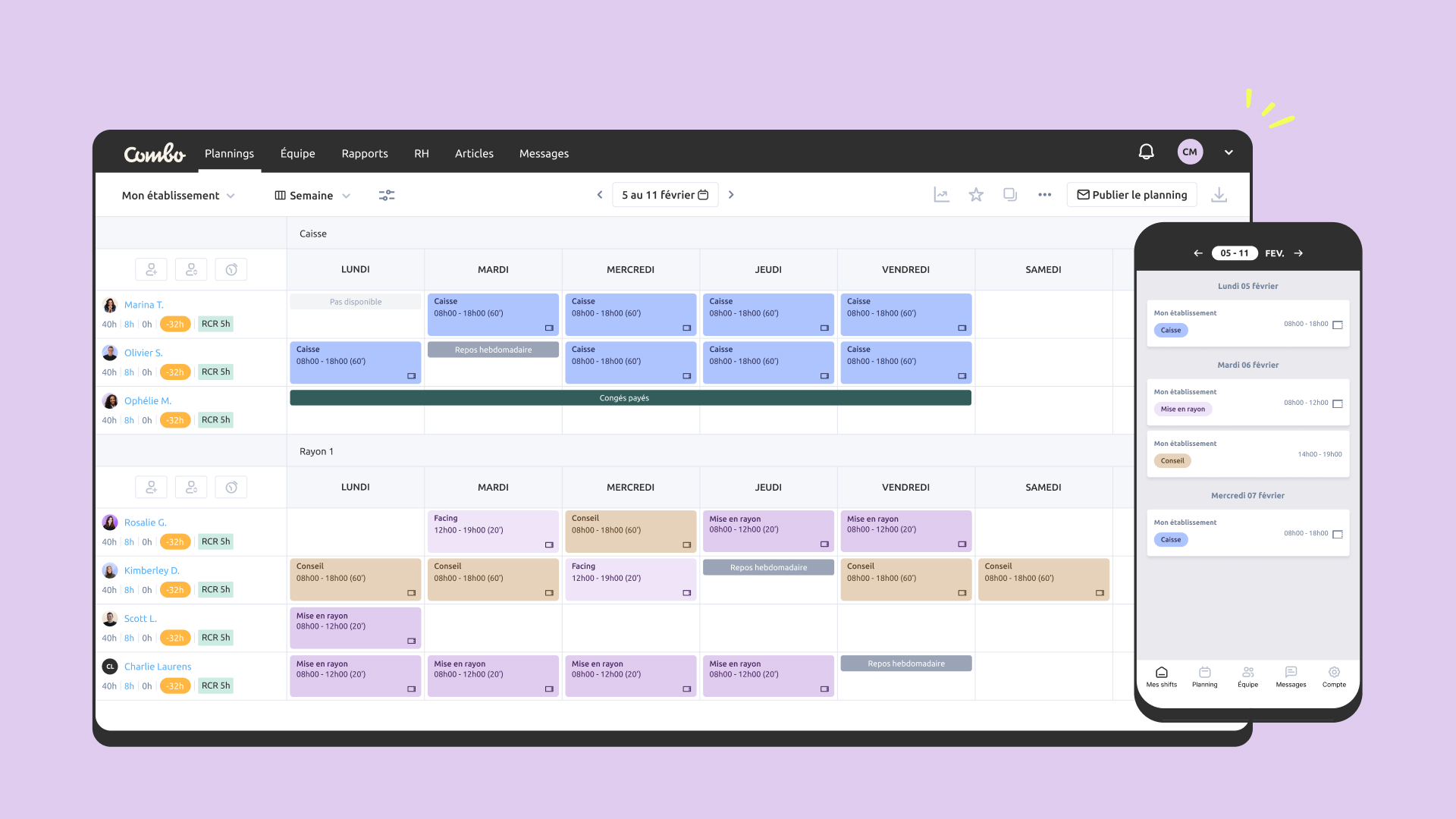
Discover the rules and number of working days for employees in France, including vacation, public holidays, and the legal working hours.
Where and how can you find the specific regulations on working hours?
Working hours in France are governed by legal texts and specific agreements. The Labor Code sets a general framework, notably with the legal working week of 35 hours. However, this legislation does not cover all the nuances, which necessitates consulting other sources such as collective bargaining agreements or company agreements that adapt these rules according to the sector.
The website service-public.fr is an essential source for obtaining reliable and up-to-date information on the rules governing working days, leave, and public holidays. For example, in sectors such as aeronautics or banking, particularly with companies like Airbus or BNP Paribas, agreements can more favorably adjust working hours and grant additional days off, often based on seniority or the nature of the position.
Collective bargaining agreements therefore play a fundamental role for employees like those at Orange or L’Oréal, as they can establish time off in lieu of overtime (RTT), modify annual leave dates, or provide for extended weekends. These documents often contain provisions more advantageous than the law, which help define the number of days actually worked. An employee with a fixed-day contract, common among managers at companies such as Société Générale, will have their working time defined not by the hour but directly in annual days, generally around 218 days.
For employers, understanding these sources allows them to better organize human resources, establish an annual roadmap, and anticipate replacement or project management needs. At large groups like SNCF or Danone, this proactive approach avoids disruption caused by unforeseen events and optimizes profitability while guaranteeing respect for employee rights.
Accurately Calculating the Number of Working Days: A Strategic Issue for Everyone
The traditional method for calculating the number of working days starts with the total number of days in a year, which will be 365 in 2025. From this, the number of weekends (Saturdays and Sundays), which represent 104 days, is deducted. Next come public holidays that fall on weekdays – 9 in 2025 – followed by mandatory paid leave, which totals a minimum of 25 working days.
Subtracting these essential elements often results in a total of approximately 227 to 228 working days. However, this calculation remains indicative: for a company like Renault or EDF, it can vary depending on sector-specific characteristics and internal agreements regarding time off in lieu (RTT) or additional days off.
Employees on fixed-day contracts, often in senior management positions and widely represented at companies like TotalEnergies and L’Oréal, have their working time directly calculated in days per year. This is generally limited to 218 days, but subject to specific agreements, some can work up to 235 days. A report by the DARES (French Directorate for Research, Studies and Statistics) highlights that these employees represent approximately 13.5% of the workforce, a share that is steadily increasing.
Similarly, part-time workers will have their number of working days adjusted proportionally to their contracted hours. For example, an employee working 80% of full-time hours at BNP Paribas will not work 228 days, but a proportionally reduced number. Why is it essential to know your number of working days? For employers, knowing precisely how many working days are scheduled annually is vital for effective team management and optimizing productivity. This facilitates scheduling, the management of peak activity periods, as seen in large corporations like Airbus or SNCF, and the calculation of payroll-related budgets. A well-designed organization can generate an estimated 7% increase in productivity, according to internal studies conducted in several major French companies. For employees, this knowledge ensures better work-life balance. It becomes possible to plan vacation periods, negotiate necessary adjustments with their employer, and better manage stress related to busy periods. This proactive approach is particularly valuable when working in demanding sectors like EDF or Danone, where workloads frequently fluctuate. A recent study revealed that 78% of employees consider it crucial to be able to schedule their vacation well in advance, a significant factor in their motivation and quality of work life. This knowledge also allows them to verify compliance with working hours and avoid potential disputes regarding working time.
To delve deeper into these concepts and understand how to effectively manage one’s working time, it is helpful to explore additional resources such as those dealing with labor law or professional development to optimize one’s career.
Factors that affect the number of days worked and their impact
Several parameters can lead to significant variations in the total number of days worked. The type of contract plays a primary role. An employee subject to the legal 35-hour work week generally works five days a week, while some 39-hour contracts include RTT (reduced working time) days as compensation. Sometimes, collective bargaining agreements impose specific rules, particularly in the banking or industrial sectors, where additional days off are granted, as is often the case at BNP Paribas or TotalEnergies. These benefits can stem from seniority leave, collective closures, or extended weekends stipulated in the agreements. Public holidays also play a key role in this calculation. In 2025, France has 11 public holidays, 9 of which fall on working days, directly impacting the actual hours worked. Some regions, such as Alsace-Moselle, benefit from additional public holidays, resulting in fewer working days compared to the national average. These regional variables are essential for multi-site companies, such as Renault or L’Oréal, to understand in order to best harmonize their annual schedules.
Finally, we cannot ignore the specificities of part-time work, where the number of working days is adjusted according to the percentage of activity, thus affecting both pay and leave entitlements. For employees interested in proactively managing their work, online tools exist to refine this calculation, with methods explained in detail on specialized websites.